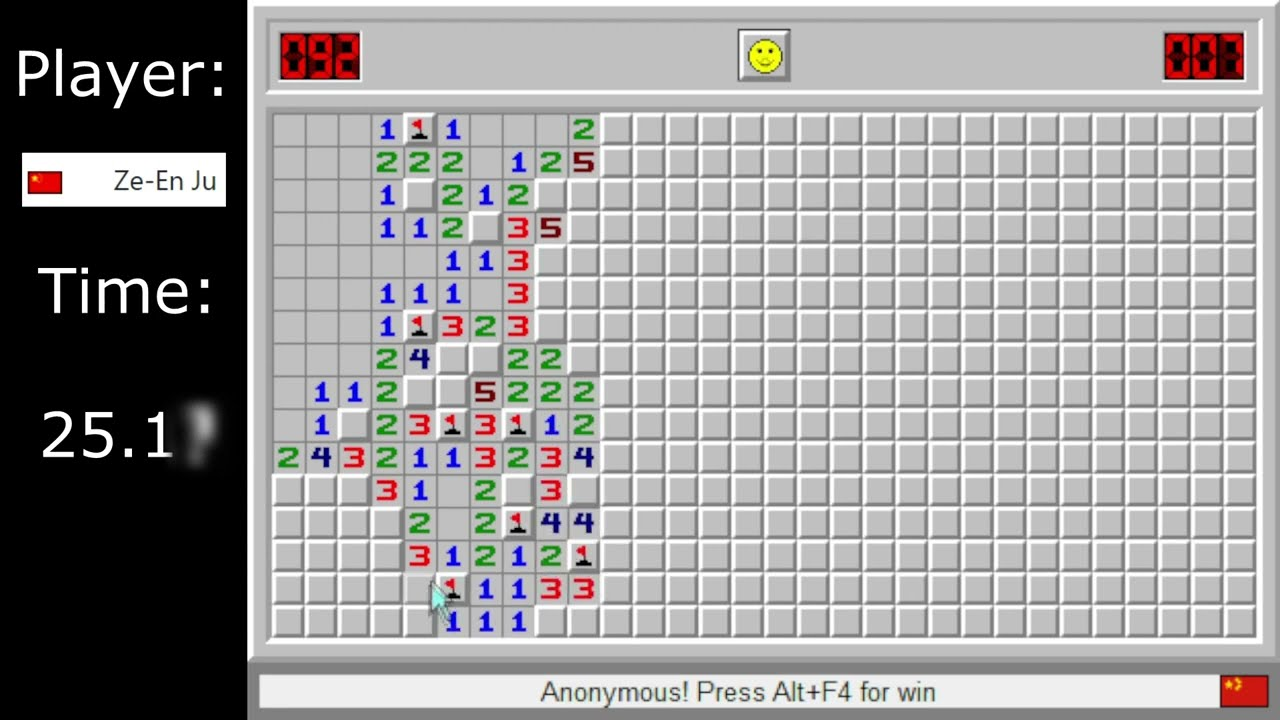
Introduction
Minesweeper is a classic puzzle game that tests your speed, focus, and problem-solving skills. The goal is simple. Clear every safe square without clicking on a hidden mine. However, completing a board quickly takes practice and careful thinking.
The world record minesweeper challenge attracts players who enjoy beating personal bests. Some players focus on beginner boards, while others prefer harder challenges. Each difficulty level requires different skills and strategies. Learning the rules can help you become a better player.
If you are new to Minesweeper, you do not need special equipment to begin. You can practice using a computer or a compatible online version. Learning number patterns can help you make better decisions. Over time, you may solve boards faster and more confidently.
This guide explores the world record minesweeper topic, easy-mode challenges, gameplay rules, and useful speedrunning tips. You will also learn how to track your progress and improve your personal best.
What Is the World Record Minesweeper?
The world record minesweeper usually refers to the fastest verified completion time for a particular game format. However, there is not always one record that applies to every version. Different websites, platforms, and rule sets may use different boards and timing methods.
Classic Minesweeper commonly offers beginner, intermediate, and expert difficulties. Each level has different board dimensions and mine counts. This means players should compare times only when the rules match. A record on one version may not be directly comparable to another version.
Players interested in the world record minesweeper should check leaderboard rules and verification standards. These rules may explain accepted versions, timing methods, and whether custom boards qualify. A reliable record needs evidence that supports the claimed result.
Understanding Minesweeper Difficulty Levels
Minesweeper is often divided into three standard difficulty levels. Beginner boards are smaller and contain fewer mines. Intermediate boards require more planning. Expert boards have larger playing areas and more complicated patterns.
Beginner mode is usually the best starting point. It allows new players to understand numbers without facing too many squares. Intermediate mode builds confidence with more complex situations. Expert mode challenges experienced players to combine pattern recognition with fast decisions.
Difficulty also affects speed records. A short beginner completion cannot be compared fairly with a larger expert board. When researching the world record minesweeper, check the board size, mine count, and game rules before comparing results.
World Record Minesweeper Easy: What Should You Know?
World record minesweeper easy searches often come from players who want to discover the fastest beginner-level completion. Easy mode is popular because it offers a smaller board and a simple way to practice speed.
However, an exact record depends on the version and category being measured. Some leaderboards separate beginner records from other difficulty levels. Others track different game versions or custom settings. Therefore, check a current leaderboard before accepting a particular time as an official record.
If you want to improve your world record minesweeper performance, begin by learning the standard beginner board. Focus on understanding each number and opening safe squares efficiently. Avoid rushing through uncertain moves. A quick loss will not help you improve your completion time.
How Minesweeper Records Are Measured
A speed record normally depends on how quickly a player completes a valid board. Yet different platforms can measure time in different ways. Some start the timer with the first move. Others may use different timing rules or additional restrictions.
Before comparing world record minesweeper results, look for these details:
- Game version: Confirm which Minesweeper version the player used.
- Difficulty: Check whether the result belongs to beginner, intermediate, or expert mode.
- Board rules: Determine whether the board uses standard or custom settings.
- Timing method: Check when the timer starts and stops.
- Verification: Look for a recording or leaderboard evidence.
- Category rules: Make sure the result follows the competition requirements.
These details help you compare similar performances. They also prevent confusion between personal bests and officially recognized records. Always check the source before sharing a record claim.
Why Is Minesweeper Easy Mode Popular?
Easy mode gives players a friendly introduction to the game. Its smaller board makes it easier to study number patterns. Beginners can learn the rules without handling too many clues at once.
The game also offers quick rounds. You can complete several boards during a short break. Each round gives you another chance to practice. This makes beginner mode useful for learning the basics and improving your reaction time.
Easy mode is not only for new players. Experienced players may use it to practice efficient clicking and familiar patterns. Some also enjoy trying to improve their personal records. If you are exploring the world record minesweeper challenge, beginner mode offers a practical place to start.
Basic Rules Every Player Should Learn
Minesweeper places hidden mines beneath some squares. Your task is to reveal every safe square without opening a mine. Numbers appear when you uncover squares near mines. Each number tells you how many mines touch that square.
For example, a square showing one has one mine in its surrounding eight squares. A square showing three has three nearby mines. You can use these clues to work out which squares are safe.
Flags help you mark suspected mine locations. They do not remove mines or make a square safe. Instead, they remind you where you believe mines are hidden.
Some versions automatically finish when all safe squares are revealed. Others may have slightly different rules. Understanding your chosen version is important when preparing for the world record minesweeper challenge.
Best Tips for Improving Your Minesweeper Time
Improving your time starts with learning the game rather than clicking randomly. Look for number patterns that reveal safe moves. With practice, common situations become easier to recognize.
Try these useful habits:
- Study numbers first. Check nearby clues before opening another square.
- Learn common patterns. Recognize simple combinations around edges and corners.
- Use flags carefully. Mark mines when the evidence supports your choice.
- Avoid unnecessary pauses. Plan your next move while reviewing the board.
- Practise regularly. Short sessions can help you remember patterns.
- Review mistakes. Learn why a move failed instead of repeating it.
- Track your times. Record your results to measure real progress.
The best strategy balances speed and accuracy. If you want a faster world record minesweeper time, build strong habits before increasing your clicking speed. Careful decisions can help you complete more boards successfully.
Common Minesweeper Patterns to Recognize
Number patterns help you identify safe squares and likely mine locations. One useful beginner situation occurs when a number touches only one unopened square. If that number already has the correct number of flagged mines nearby, the remaining unopened square is safe.
Another common situation involves a number that already accounts for all nearby unopened squares. Those squares must contain mines if the surrounding information is complete and correctly understood.
These patterns become easier with repeated practice. Still, not every board offers a clear answer immediately. Some situations require information from other numbers. Others may involve a genuine guess, depending on the board and version.
Players working toward a world record minesweeper personal best should avoid assuming every move has a guaranteed solution. Check all nearby clues before making a risky click. This habit can protect your progress and help you understand difficult boards.
How to Practise for a Faster Personal Best
Start by playing several beginner boards without worrying about your time. Concentrate on learning the numbers and making correct moves. Once you feel comfortable, begin recording your completion times.
Choose a small goal for each session. You might aim to make fewer mistakes or reduce unnecessary pauses. After several rounds, compare your results and look for patterns in your performance.
You can also practise one skill at a time. Spend a session learning number combinations. During another session, focus on efficient mouse movements. This approach makes improvement easier to measure.
A personal best is useful even when it does not match a public record. It shows that your skills are improving. Anyone pursuing the world record minesweeper challenge should remember that board layouts vary. One unusually fast or slow result does not tell the whole story.
Tools and Websites for Checking Records
Online Minesweeper games make it easy to practise without installing software. Some platforms provide timers, statistics, and leaderboards. Others focus on simple gameplay without formal competitions.
When researching the world record minesweeper, choose sources that explain their categories clearly. Look for the exact game version, difficulty level, and verification rules. If a leaderboard lists a record, check whether its information is current.
Community forums and speedrunning communities can also provide useful discussions. Players sometimes share videos, techniques, and explanations of their results. These resources can help you understand how skilled players approach difficult boards.
Remember that an online claim is not automatically an official record. Always check the source and its rules before repeating an exact time. If trustworthy verification is unavailable, describe the result as an unverified claim.
Mistakes That Can Slow You Down
One common mistake is clicking before studying the surrounding numbers. This can lead to avoidable losses. Take a moment to understand the clues before choosing your next square.
Another mistake is placing flags without enough evidence. Incorrect flags can confuse your later decisions. Make sure each flag matches the number information you have already revealed.
Some players also focus too much on speed. They rush through easy moves but overlook important clues. This habit can reduce accuracy and waste time through repeated failures.
Finally, do not compare your results with players using different rules. Board size, mine count, and timer settings can change the difficulty. Fair comparisons help you set realistic goals while pursuing your own world record minesweeper milestone.
Is Minesweeper Good for Brain Training?
Minesweeper encourages logical thinking, attention, and pattern recognition. Players must study clues, consider possible outcomes, and make decisions. These activities can provide an enjoyable mental challenge.
The game also teaches patience. Sometimes, the safest move requires reviewing several numbers instead of clicking immediately. This process encourages careful observation and thoughtful problem-solving.
However, Minesweeper should be treated as entertainment rather than a guaranteed way to improve general intelligence. Skills learned in the game may not automatically transfer to every real-life situation.
The main benefit is the challenge itself. You can enjoy short rounds, test your concentration, and work toward personal goals. Whether you play casually or pursue the world record minesweeper challenge, the game offers an enjoyable way to practise problem-solving.
Conclusion
The world record minesweeper challenge attracts players who enjoy speed, accuracy, and clever problem-solving. Beginner mode is a useful place to start because it teaches the basic rules on a smaller board.
If you want to improve, learn number patterns, practise regularly, and track your best times. Check leaderboard rules before comparing your performance with published records. Remember that different game versions can produce different results.
You do not need to become a world champion to enjoy Minesweeper. Every improved time is a reason to feel proud. Start with an easy board, practise smart moves, and see how much you can improve. Your next personal best could be closer than you think.
FAQs
1. What is the world record Minesweeper time?
There is no single time that applies to every Minesweeper version and category. The accepted record depends on the difficulty, board rules, timing method, and verification standards. Check a current leaderboard for the specific category you want to explore.
2. What is the world record Minesweeper easy time?
The world record minesweeper easy time depends on the leaderboard and game version. Beginner categories may use different rules across platforms. Check the relevant leaderboard for a verified result rather than relying on an unsupported number.
3. Is Minesweeper easy for beginners?
Yes, beginner mode is a good place to start. It has a smaller board and fewer mines than harder modes. Learn how numbers work before trying to complete boards quickly.
4. How can I get faster at Minesweeper?
Learn common number patterns, practise regularly, and avoid unnecessary clicks. Review mistakes after each game. Focus on making accurate decisions before trying to increase your speed.
5. Do flags count as safe squares?
No, flags only mark squares that you believe contain mines. They help you remember your deductions. You must still reveal the safe squares required by your version to complete the game.
6. Can I set my own Minesweeper record?
Yes, you can set a personal best by tracking your completion times. Record the game version and difficulty for useful comparisons. If you want an officially recognized record, follow the relevant leaderboard’s rules and evidence requirements.
